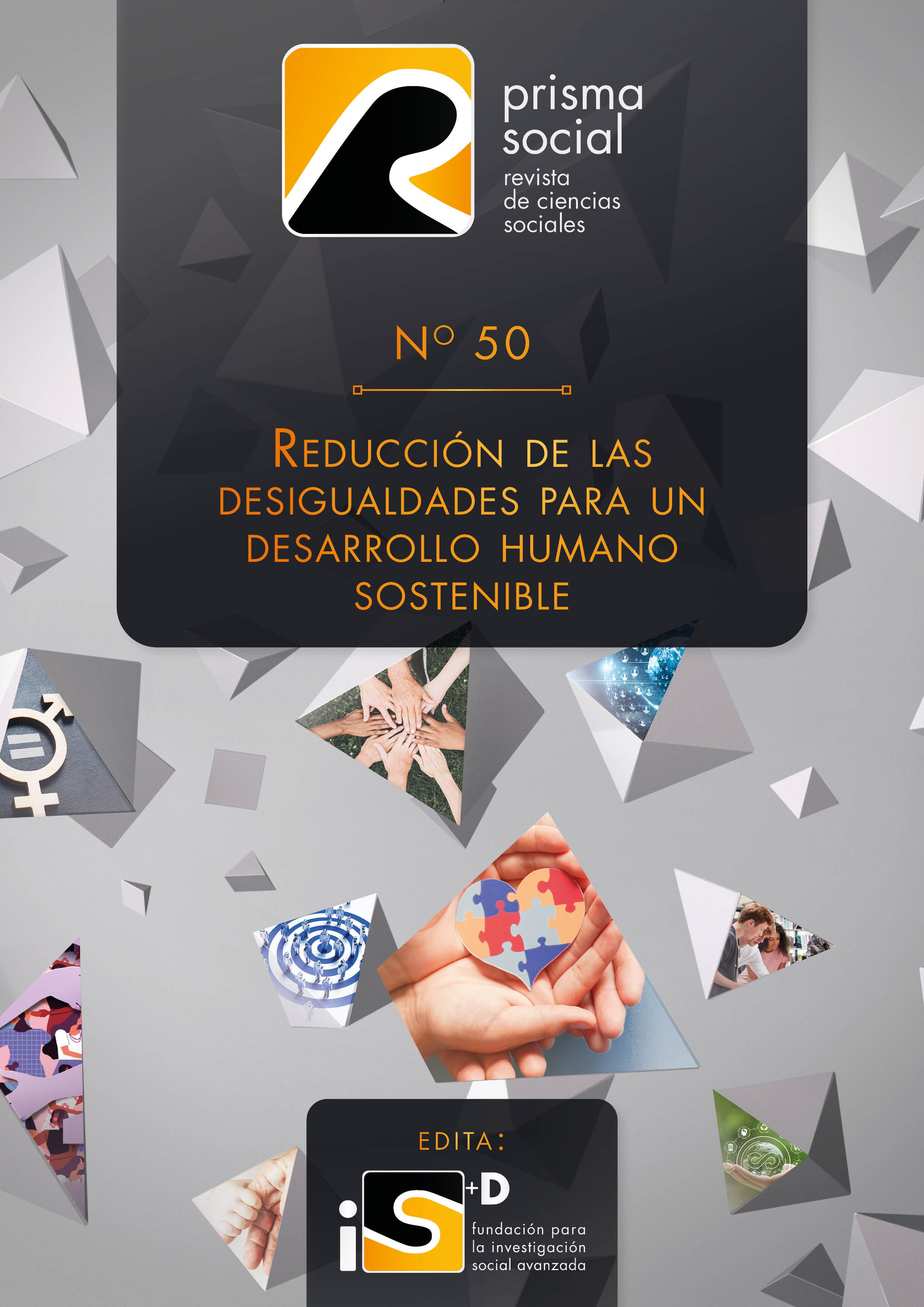
Reduction of Inequalities for Sustainable Human Development
DOI:
https://doi.org/10.65598/rps.5917Keywords:
inequality, diversity, human development, sustainabilityAbstract
In response to the call for papers for this monographic issue, a total of 77 proposals were received, of which 10 articles were selected after a rigorous evaluation process. The included works address the challenges of inequality in diverse and complementary ways from multiple dimensions: aging and disability policies, the inclusion of the LGTBIQ+ community in the university setting, the social and labor exclusion of migrants, mental health and human rights, symbolic violence in digital spaces, as well as innovative models of housing and socio-educational participation. Together, these research projects offer a valuable contribution to critical analysis and the search for solutions to build more equitable and inclusive societies.
Downloads
References
-
Downloads
Published
How to Cite
Issue
Section
License
Copyright (c) 2025 Revista Prisma Social

This work is licensed under a Creative Commons Attribution-NonCommercial-NoDerivatives 4.0 International License.
Those authors who publish in this journal accept the following terms:
-
Authors retain copyright.
-
Authors transfer to the journal the right of first publication. The journal also owns the publishing rights.
-
All published contents are governed by an Attribution-NoDerivatives 4.0 International License.
Access the informative version and legal text of the license. By virtue of this, third parties are allowed to use what is published as long as they mention the authorship of the work and the first publication in this journal. If you transform the material, you may not distribute the modified work. -
Authors may make other independent and additional contractual arrangements for non-exclusive distribution of the version of the article published in this journal (e.g., inclusion in an institutional repository or publication in a book) as long as they clearly indicate that the work was first published in this journal.
- Authors are allowed and recommended to publish their work on the Internet (for example on institutional and personal websites), following the publication of, and referencing the journal, as this could lead to constructive exchanges and a more extensive and quick circulation of published works (see The Effect of Open Access).